
Huntsville’s growth has been closely tied to annexation, allowing the city to add land for major employers, housing and other development while reviewing the potential impact on public services.
Annexation starts with the property owner
The process begins when a property owner asks the City of Huntsville to annex their land. Requests can range from individual property owners seeking access to Huntsville City Schools to large developments that want access to city services.
Before a request moves forward, the Planning Department determines whether the property qualifies. One key requirement is that the land must directly connect to existing city property. The connection must share a meaningful boundary rather than simply meet at a corner.
The city also does not use road rights-of-way to create a connection between otherwise separate properties.
Multiple departments review each request
Once a property is found eligible, the request is reviewed by city departments. Public safety agencies, Public Works and other departments examine how the proposed annexation could affect services such as police, fire protection, roads, sewer infrastructure and garbage collection.
The proposed use of the property is also part of the review. Future plans could include residential, commercial or mixed-use development.
After city departments complete their reviews, the request goes to the Planning Commission. Its Zoning subcommittee must first approve it before the full commission holds a public hearing and votes.
City Council then makes the final decision. Residents can also provide input by contacting council members or speaking during a council meeting.
Large developments are reviewed for long-term impacts
Large annexations can attract more attention because they may eventually bring hundreds or thousands of new residents.
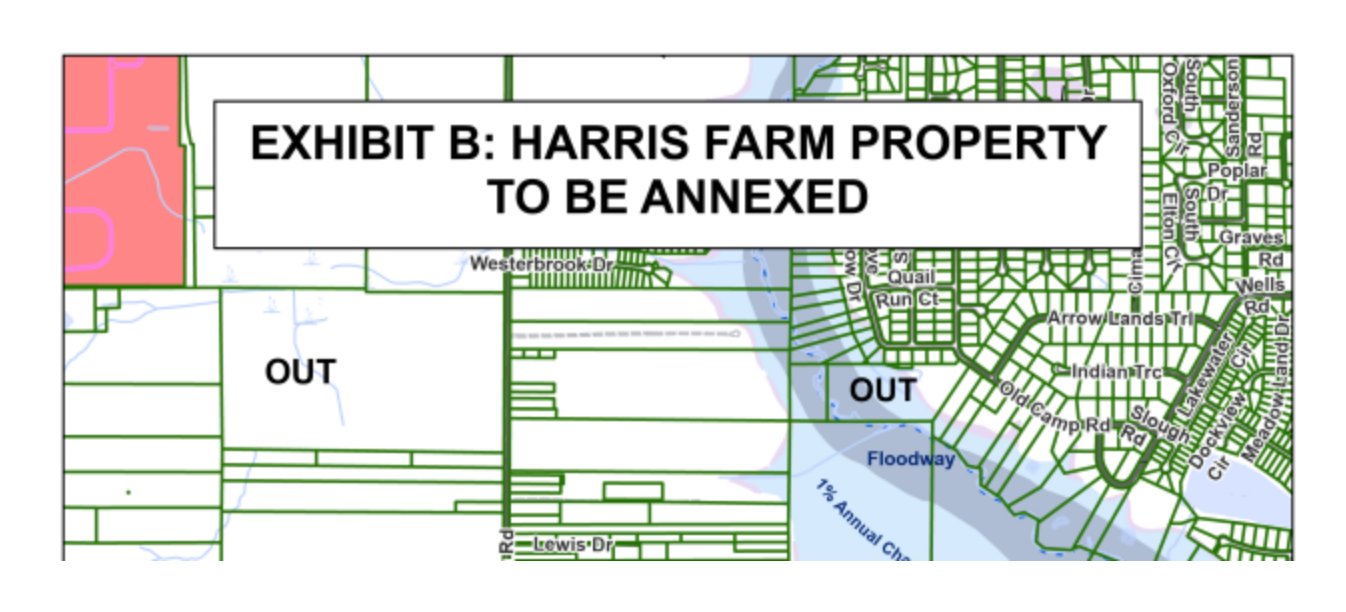
The Harris Farms project is one example. Huntsville City Council approved the annexation of 572.48 acres in 2025, and developers have announced plans for about 1,800 homes across the property.
However, large developments typically take years to reach full buildout. City planners consider construction timelines and market conditions when evaluating potential effects on schools and infrastructure.
The city also works with the school system to monitor population and housing trends. Census information, birth rates, mortality rates and other demographic factors can help estimate future enrollment.
Road capacity is another consideration, particularly for developments near major transportation projects. Harris Farms, for example, is located near the expanded State Route 255, also known as the Northern Bypass.
With Huntsville surrounded largely by unincorporated areas, annexation remains an important part of the city’s growth strategy. Each request must go through the same detailed review before land becomes part of Huntsville.
Sign up for the Homely Huntsville newsletter to stay up to date on Huntsville.