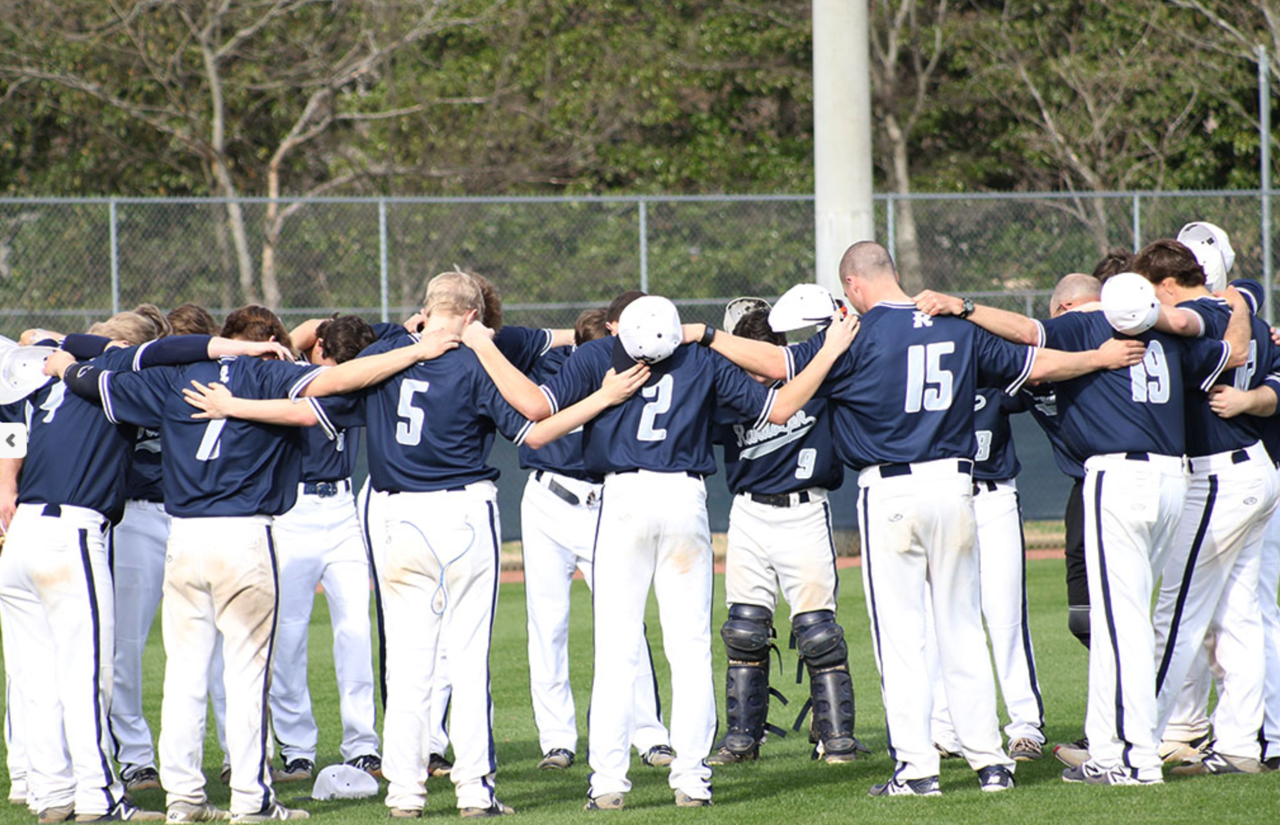

I’m a former private school athlete at Randolph School, where I attended K–12 and played football and baseball.
I was the quarterback in football and a pitcher and third baseman in baseball. I was recruited to Tulane University as a pitcher, tore my UCL, greyshirted, and ultimately never played.
My perspective is shaped by competing against high-level competition.
During my high school career, Randolph competed in 4A and 5A. We played against elite talent, including first-round NFL DL Quinnen Williams, second-round MLB draft pick Cody Reed, and several other D1 talents, several of whom played in the SEC.
That level of competition mattered. It showed you exactly where you stood as a player.
Under the new private school divide, they will be limited in the competition they could face. Most of the best athletes I played against were at public schools.
If you want to be great, you have to compete against the best and hold your own. That’s how growth happens. That’s how you learn whether you belong or if you need to be working even harder.
And we should want to push our state athletes to be the best they can be. That not only translates into athletic success, but also flows into all other aspects of life. Winners win.
If I were a Randolph athlete today, I’d be disappointed by the cap on competition and the resulting loss of the kind of “glory” that comes from beating someone you aren’t supposed to beat.
One of the highlights of my athletic career was closing out a second-round playoff game with a runner on third and a one-run lead, beating our local county rival in the second round, and advancing to the third round for the first time in over 14 years.
That rivalry is now dead in the new system.
Sure, they dominated us in football all four years, but that rivalry, that challenge, mattered. It pushed us to be better individuals and a better team.
Moments like that don’t exist when competition is diluted. We are seperating athletes who should be competing against each other.
Does winning a private-school-only championship really feel the same when you know there’s higher-level, relevant competition you’re no longer playing, and should be?
Part of what makes sports special is measuring yourself against the best available opponents, assuming you prove you belong at that level in the first place. Where you belong, ultimately, is the definition being debated.
Travel ball has already taken over youth sports in a significant way, and this change could accelerate that shift even further.
Will fewer kids choose to play school sports when their friends opt for travel teams instead? Or opt out of playing school ball because it now requires three-hour drives each way, during the regular season?
At that point, why not just play travel ball only, where at least you can choose your level of competition? My elbow can attest that you can only play for so many teams.
If I were a private school parent, I’d be concerned about the travel demands. Late nights on the road, week after week, aren’t trivial, especially when kids still have school the next day. Getting home after midnight, week after week, doesn’t sound safe.
If this is the direction things are heading, game times should move up significantly.
While this model may be working in Tennessee, I’m not convinced Alabama’s private schools have equivalent programs like McCallie or Baylor that fully justify the comparison, maybe McGill-Toolen?
Lastly, during my time at Randolph, the school did not recruit athletes. That said, I know private schools do recruit. I was recruited to another private school.
But public schools recruit, too; all you have to do is look at some of the rosters. There are only so many truly elite athletes who grow up in any given area.
That’s why I believe the multiplier and sliding scale have already appropriately addressed any competitive imbalance.
Randolph was actually worse off in “big 3” sports because of the multiplier; we probably should’ve been in 3A during much of my time there.
A 170-pound guard blocking Quinnen Williams doesn’t end well.
From my perspective, I’d be disappointed if I were still a private school athlete today. And I’d be uneasy if I were a private school parent.
I do not care to debate either way.